Choose your format.
A panel for flexible positioning, a mask for face coverage, or a mat, bag or wrap for a different home setup. Match the coverage and features to your routine.
Display estimates. Checkout in USD.
How red & near-infrared light works—explained clearly, from the science to your everyday setup.
Photobiomodulation (PBM) explores how selected wavelengths interact with light-absorbing molecules in tissue. Researchers investigate mitochondrial pathways, including cytochrome c oxidase, and downstream changes in cellular signals. [1]
It is a biological interaction, not just a red glow. Responses vary with the wavelength, the dose and the condition of the cells. A laboratory result does not establish a medical benefit for a home device.
Explore six light categories. Select a circle for research context and check the actual wavelengths of each MCWOFI model below.
Start with the instructions for your exact model. Positioning, settings and session schedules vary across devices.
A panel for flexible positioning, a mask for face coverage, or a mat, bag or wrap for a different home setup. Match the coverage and features to your routine.
Read the manual. Use the specified distance or fit, choose the recommended settings, and follow all eye-protection instructions.
Follow your model’s duration and frequency. Use its timer, pay attention to comfort, and clean and store the device as instructed.
Irradiance × time determines incident surface dose. Distance, pulse duty cycle and coverage matter too. Use our calculator to understand the numbers, alongside your device instructions.
Explore genuine MCWOFI products. Choose by coverage, fit and model specifications.
Flexible face & body positioning
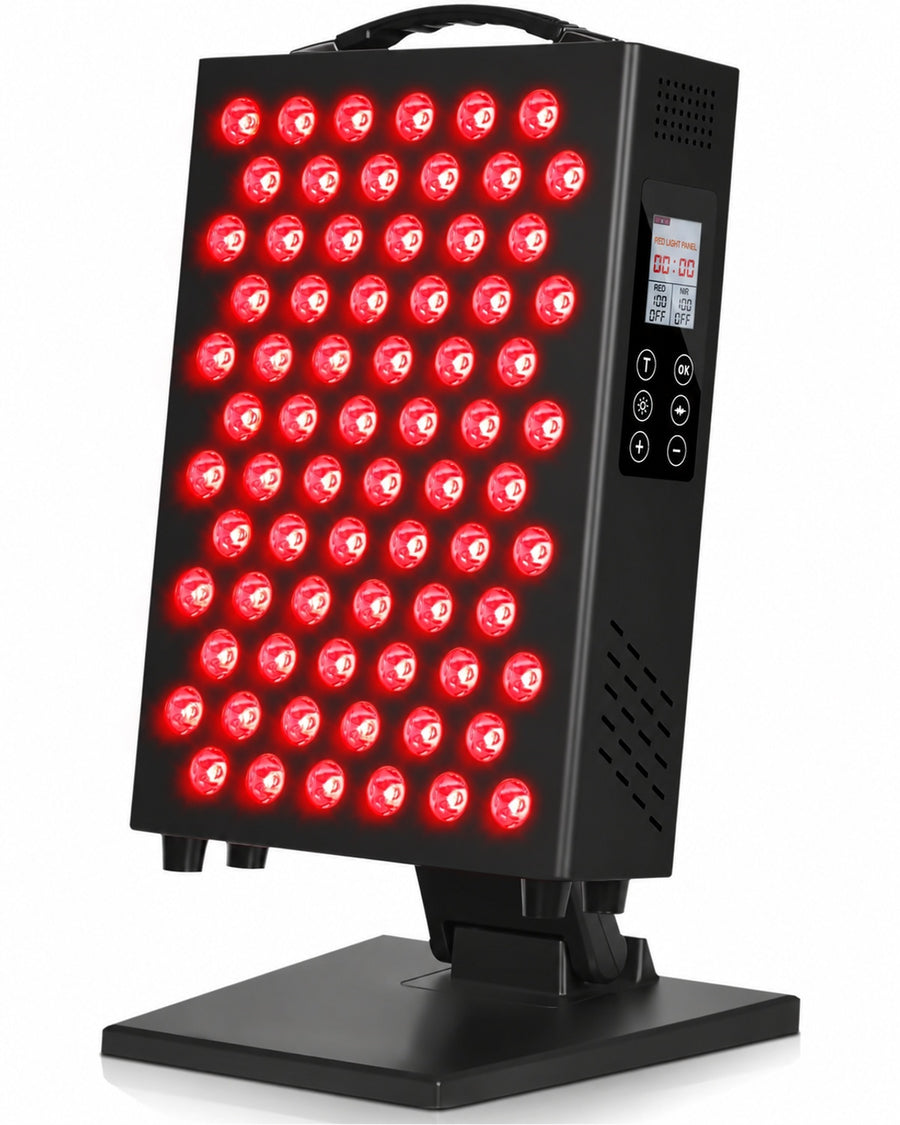
72 dual-chip LEDs · 660 / 850nm
Lie down. Make a little space.
Full-body mat · 660 / 850nm
Your full-body downtime
Detachable sections · 660 / 850nm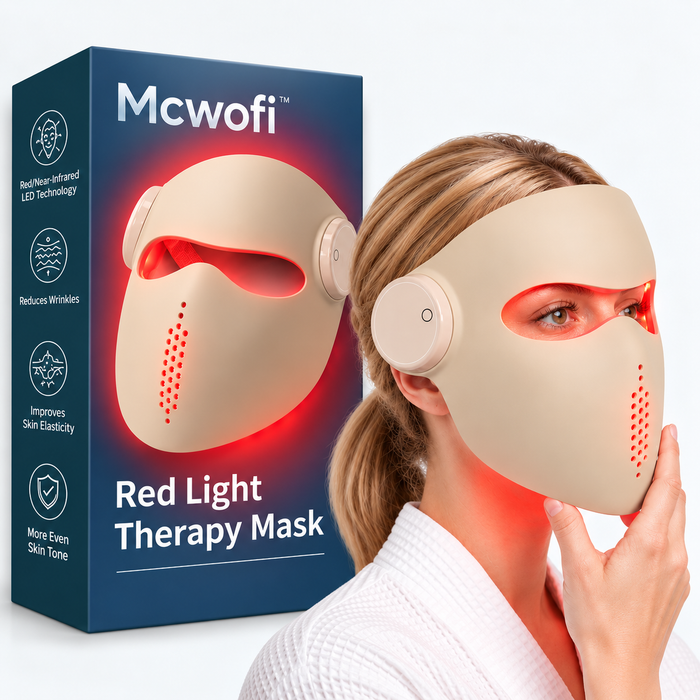
A hands-free skincare ritual
415 / 633 / 830 / 1072nm
Light for your scalp-care routine
630 / 850 / 940nm
Contoured neck & shoulder coverage
Wearable design · 660 / 850nmExplore what has been studied—and the limits of what a study can tell you. These publications used their own equipment and protocols, not the MCWOFI products shown here.
Wang and colleagues compared 810nm and 980nm lasers in human adipose-derived stem cells, investigating different cellular mechanisms.
Lab-grown cells, not a clinical trial. The study does not validate these MCWOFI wavelengths or devices.
Read original study ↗Wunsch and Matuschka examined skin appearance, texture and collagen measurements using red and broader-spectrum light sources.
Different lamp systems; the control group was not randomized. Sponsor-funded findings cannot be transferred to a home LED product.
Read original study ↗Foley and colleagues explored an 830nm LED protocol in injured university athletes, including return-to-play observations.
Pilot findings without a concurrent control group. This is not proof of injury treatment or recovery benefits for MCWOFI devices.
Read original study ↗Educational references only. Research outcomes depend on study design, participants, device output and dose. No medical benefit, timeline or result is promised.
Need instructions for your model?
Talk to the MCWOFI team →
Red light therapy is a form of light exposure often discussed as photobiomodulation (PBM). Researchers study how selected red and near-infrared wavelengths interact with tissue and cellular processes. The evidence depends on the application and the exact device and protocol.
No. Red light is visible; near-infrared is invisible to the human eye. MCWOFI devices use different combinations, so check the specifications of your exact model. Do not use visible brightness to judge near-infrared output.
No. This explorer brings together six wavelengths from selected models. The 72 dual-chip panel lists 660/850nm; the cream 3D mask lists 415/633/830/1072nm. Other models have different configurations. Product links above show which wavelengths belong to each device.
Follow your model’s included manual for duration, frequency, distance, brightness and mode. There is no single schedule for all panels, masks, mats or wraps. A longer session or higher setting is not automatically better.
Follow the eye-protection instructions supplied with your model. Do not stare directly into the LEDs, and do not assume that invisible near-infrared is harmless to the eyes. Use the specified protection.
The Dosage Calculator converts verified irradiance and time into incident surface dose. It does not measure absorbed tissue dose, determine medical suitability or prescribe a treatment. Use a measured value at your actual distance and settings.
Read the manual and its contraindications first. If you have a medical condition, a history of light sensitivity or take medicines that may cause photosensitivity, ask a qualified healthcare professional about suitability. Stop use if you experience discomfort or an unexpected reaction.
No. The linked publications are educational resources involving their own equipment, populations and protocols. They are not clinical validation, regulatory clearance or endorsements of MCWOFI products. For product documentation, contact us with your model.
Explore the collection, compare the details, and build a routine around the device that fits you.
This page provides general education, not medical advice or a treatment plan. Follow the instructions and contraindications for your specific MCWOFI device. Product specifications are model-specific.